
Welcome to SigmaF, the Program Language of the future for the Functional Programming and a lot more.
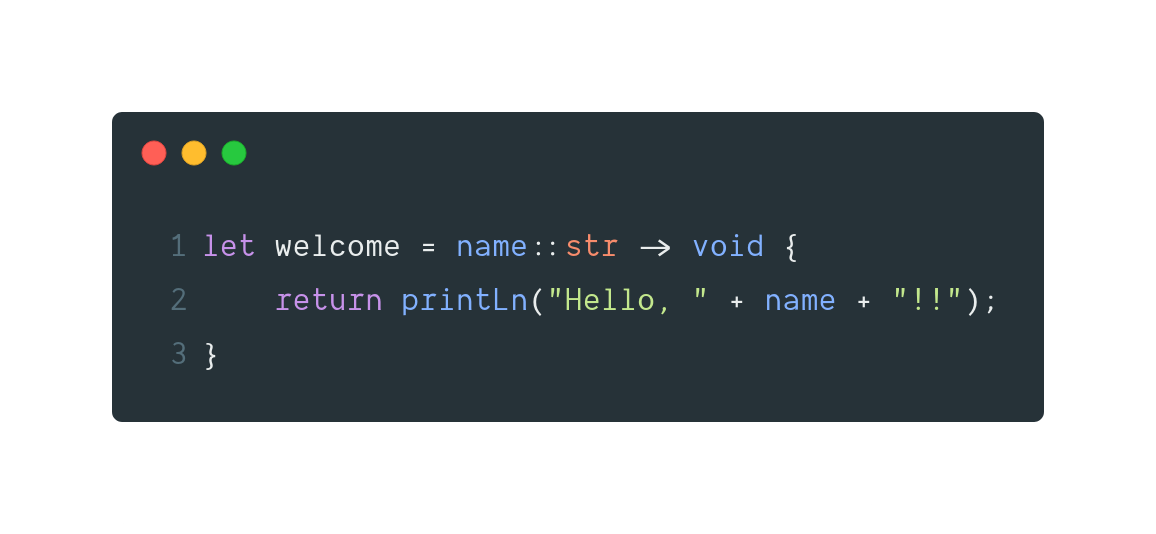
What is SigmaF
SigmaF is a new open source and functional paradigm programming language, inspired by languages like
Haskell, Python, JavaScript, and Rust.
SigmaF is an interpreted language fully built using Python.
What is the propouse
This language is designed to be a multipurpose functional programming language, focus on been able to write programs that are easy to understand and easy to write. Using a syntax similar to programming languages of imperative paradigm. Of way that be a bridge between imperative and functional paradigm.
How is builting
The language was built using Python 3.8 version.
For the future
Important Note: SigmaF is an experimental toy language created primarily for educational purposes and learning about programming language design. It should not be considered for production use or serious development projects.
Educational Goals
This project serves as a learning platform to explore concepts in:
- Functional programming language design
- Interpreter implementation using Python
- Bridging imperative and functional programming paradigms
- Language syntax and semantics exploration
Potential Future Experiments
While this is a toy project, there are interesting areas that could be explored for learning purposes:
- Basic Concurrency: Simple threading experiments
- Type Inference: Basic type checking mechanisms
- Performance: Bytecode compilation experiments
- Standard Library: Essential utility functions
- Tooling: Simple REPL improvements and debugging tools
Learning Opportunities
SigmaF offers great learning opportunities for:
- Students studying programming language theory
- Developers interested in interpreter design
- Anyone curious about functional programming concepts
- Contributors wanting to experiment with language features
Contributions Welcome! Even though SigmaF is a toy language, it's open source and welcomes contributions from anyone interested in learning about language design. Whether you want to experiment with new features, improve documentation, or fix bugs, your contributions help make this a better learning resource for everyone.